
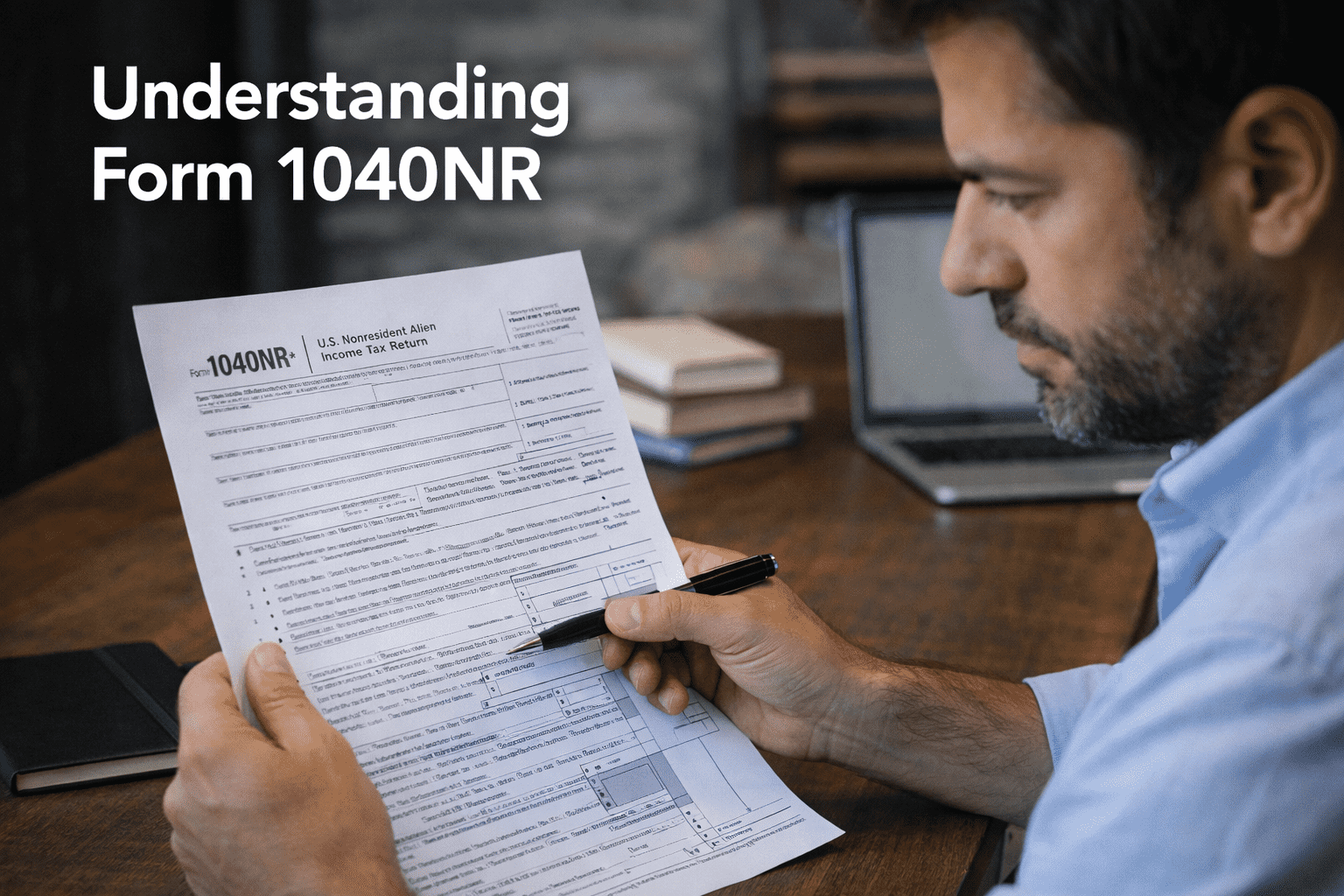
Understanding Form 1040-NR: A Comprehensive Guide for Non-Residents
Navigating the United States tax system can be a daunting task, even for seasoned investors and legal professionals. As an attorney with two decades of experience in international tax law, I often see clients overwhelmed by the complexities of the Internal Revenue Code.
One of the most critical documents for non-citizens is Form 1040-NR (U.S. Nonresident Alien Income Tax Return). Unlike the standard 1040 used by U.S. citizens and residents, the 1040-NR is specifically designed to report income that is “effectively connected” with a U.S. trade or business or sourced within the United States.
What is Form 1040-NR?
Form 1040-NR is the tax return filed by Nonresident Aliens (NRAs) who have U.S. source income. The IRS distinguishes between residents and non-residents primarily through the Substantial Presence Test. If you do not meet the criteria for residency (green card or physical presence), you are generally classified as a nonresident alien for tax purposes.
Who Must File Form 1040-NR?
Not every non-citizen needs to file, but if you fall into the following categories, you likely have a filing obligation:
1. Foreign Real Estate Owners (Rental Income)
If you own a home or commercial property in the U.S. and earn rental income, you are generally subject to a 30% flat tax on gross income. However, many savvy investors make an Election under Section 871(d).
-
The Benefit: This allows you to treat rental income as “effectively connected income” (ECI).
-
The Result: You can deduct expenses (mortgage interest, property taxes, repairs, and depreciation) and only pay tax on your net profit at graduated rates.
2. Business Owners and Entrepreneurs
If you operate a business in the U.S. (even as a sole proprietorship or through a transparent entity like a single-member LLC), you must report that income on Form 1040-NR.
-
Trade or Business: If your activities are “considerable, continuous, and regular,” the IRS views you as engaged in a U.S. trade or business.
-
Treaty Benefits: Depending on your country of residence, you may be eligible for tax treaty benefits that reduce or eliminate your U.S. tax liability.
3. International Students (F, J, M, or Q Visas)
Students and scholars are often surprised to find they have filing requirements even if they didn’t work.
-
Exempt Individuals: Under the “Substantial Presence Test,” students are usually considered “exempt individuals” (exempt from counting days toward residency) for their first five years.
-
Form 8843: Even if you have zero income, you must file Form 8843 to explain your presence in the U.S.
-
Taxable Income: If you receive a taxable scholarship or have a part-time job, you must report this on Form 1040-NR.
Key Components of the 1040-NR
| Category | Description | Tax Treatment |
| ECI | Effectively Connected Income (e.g., Wages, Business Income) | Taxed at graduated rates (same as U.S. citizens). |
| FDAP | Fixed, Determinable, Annual, Periodical (e.g., Dividends, Royalties) | Taxed at a flat 30% (unless reduced by a treaty). |
| Capital Gains | Sale of personal property | Usually not taxed for NRAs, unless present in the U.S. for 183+ days. |
Why Compliance Matters
Failure to file Form 1040-NR can result in severe penalties, interest, and—perhaps most importantly—complications with future visa or green card applications. The IRS and USCIS often share information; showing that you have been a “tax-compliant” visitor is vital for your legal standing in the United States.
Pro Tip: Always check for a Tax Treaty between your home country and the U.S. These treaties are designed to prevent “double taxation” and can save you thousands of dollars in liabilities.